How Six States Plan to Pay for Stronger Roofs
Stronger roofs save money, cut claims, and stabilize insurance markets. So why do so many homes still have weak roofs?
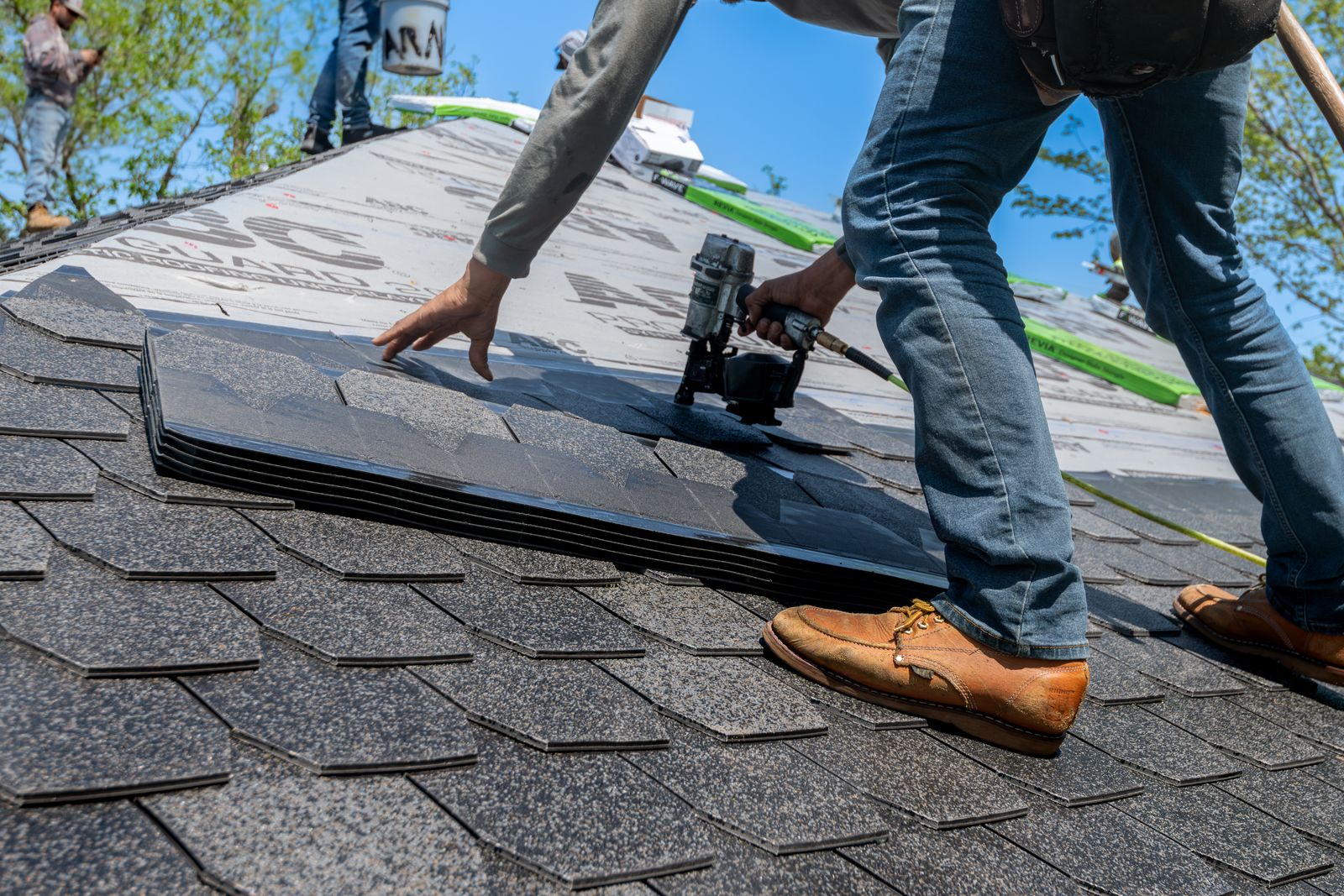
Six states are developing approaches to finance investments that help individual homes and buildings withstand disasters: Alabama, Florida, Louisiana, North Carolina, Oklahoma, and one more Midwest state. The report doesn’t name the sixth state.
These programs center primarily on roofs certified to meet the FORTIFIED construction standard from the Insurance Institute for Business and Home Safety, and related changes that help roofs and homes withstand strong winds. The financing approaches may extend beyond roofing.
What Is a FORTIFIED Roof?
A FORTIFIED roof is built to clear rules for wind, hail, and hurricane damage. It is not just a promise on paper. A trained checker confirms the roof meets the standard.
That check matters. In every state program in this report, money is tied to a checked result. Funds are released only after the upgrade is checked and approved, and payments often go directly to contractors rather than homeowners.
The Evidence: Stronger Roofs Pay Off
Alabama — Hurricane Sally, 2020
Source: Alabama Department of Insurance and Center for Risk and Insurance Research analysis cited in the report.
In Alabama, FORTIFIED roofs reduced how often losses happened by 55% to 74%, how costly losses were when they happened by 14% to 40%, and money paid out compared with money paid in by 51% to 72%.
In that same study, the authors estimated that regular homes built to the FORTIFIED standard would have saved homeowners more than 61% in deductibles paid and insurers more than 65% in total claims paid.
In North Carolina, homes with FORTIFIED roofs had roughly 35% fewer claims and 23% lower damage severity after major storms than comparable homes with standard roofs.
How States Are Paying: Five Ways
1. State-Budget Money
State governments use money approved by lawmakers in the state budget to fund grants for stronger roofs and other upgrades. Grants typically offset some or all of the cost beyond the minimum rules required by law.
2. Insurance-System Funding
Uses revenues such as taxes on insurance premiums, fees paid to state insurance regulators, insurance funds left over after claims and expenses, and required payments collected from insurers or people and organizations that hold insurance policies.
Alabama, North Carolina, and Oklahoma provide examples.
3. Tax Breaks
Direct tax benefits for homeowners undertaking stronger-roof improvements, and stronger standards in affordable-housing programs, including the Low-Income Housing Tax Credit.
Louisiana has homeowner tax incentives. Florida and Louisiana have stronger-roof rules for affordable-housing tax credits.
4. Insurance Discounts
Discounts encourage roof replacements that meet FORTIFIED or similar wind- and hail-resilient standards.
Alabama has mandatory discounts. Louisiana has statewide discounts. North Carolina has coastal discounts. Florida requires discounts aligned with FORTIFIED. Oklahoma relies more on voluntary programs.
5. Investor Money and Combined Funding
A North Carolina deal with investors sends a small share of investor returns to a dedicated fund to pay for stronger roofs when storm losses stay low enough. That money can then be reused to pay for more FORTIFIED roofs.
In that sixth Midwest state, foundation money supports stronger roofs on affordable-housing properties. The idea being tested is that reductions in future claims can be measured and used to pay back the original investment. These ideas are still being tested.
How the Programs Are Designed to Work
Checked results. Funds are released only after the upgrade is verified.
Insurance incentives. Discounts and credits reward lower risk, so homeowners see a financial benefit.
Risk-based targeting. Programs focus on high-risk places, places that flood or get damaged again and again, or neighborhoods that often get hail. North Carolina’s program is focused on coastal counties. Oklahoma started with a pilot targeted to high-risk ZIP codes, and recently expanded statewide to address hail and convective storms.
Need-based access. Of the six states, five have programs targeting homeowners with a range of grants, tax credits, and rewards tied to insurance. With support from the Robert Wood Johnson Foundation, three states are building programs targeting homes for people with lower incomes. Two programs — in Florida and that sixth Midwest state — target homes that people on modest incomes can afford. One — North Carolina — focuses on low-income homeowners aiming to upgrade homes so they can access federal help to make homes more energy-efficient and home-energy programs. Only Florida has a program addressing condo buildings with many homes in one building.
Justification and reinvestment. Tracking and counting avoided losses and savings has helped justify further state investment or private investment. For many of these state programs, savings from avoided losses are reused in their roofing programs, allowing them to expand.
Why It’s Hard: Three Setbacks
Homeowners cannot carry the cost alone. A central question for building stronger neighborhoods is how to pay for making one home stronger in a way that does not depend entirely on individual homeowners.
Public money alone will not be enough. States are starting to see that public money alone is unlikely to meet future needs. States face increasing disaster losses, housing demand, trouble in the insurance market, and tight state budgets at the same time.
Private insurers will not fund this on their own. Private insurers generally do not fund stronger roofs unless required to do so, because they cannot easily capture long-term savings given that people can switch insurers every year. That is why state laws and insurance regulations matter: they require insurers to give credit for lower risk and offer discounts that make stronger roofs financially attractive for homeowners.
The broader lesson is that stronger-roof investments are increasingly evaluated not simply as construction upgrades, but as smart spending that cuts future costs. The objective is not merely to build more homes, but to build homes that remain durable, insurable, and economically valuable over time.
What Would It Take?
Is your state doing this yet? What would it take to expand grants, require clear discounts for checked roofs, and direct more help to high-risk areas and lower-income homeowners?
Share this article
Edited by Hugi Hernandez. Based on a report by Duke’s Nicholas Institute: How States are Financing Property-Level Resilience: Lessons from Six States Scaling FORTIFIED Roof Adoption, by Lydia Olander, Matt Posner, and Sujay Dhanagare. Source
Comments
Post a Comment